High Camp
Spend the weekend on the mountain, camped near Emerald Lake and ready to help hikers at any hour, from sunrise summit hikers to anyone caught out by the weather.
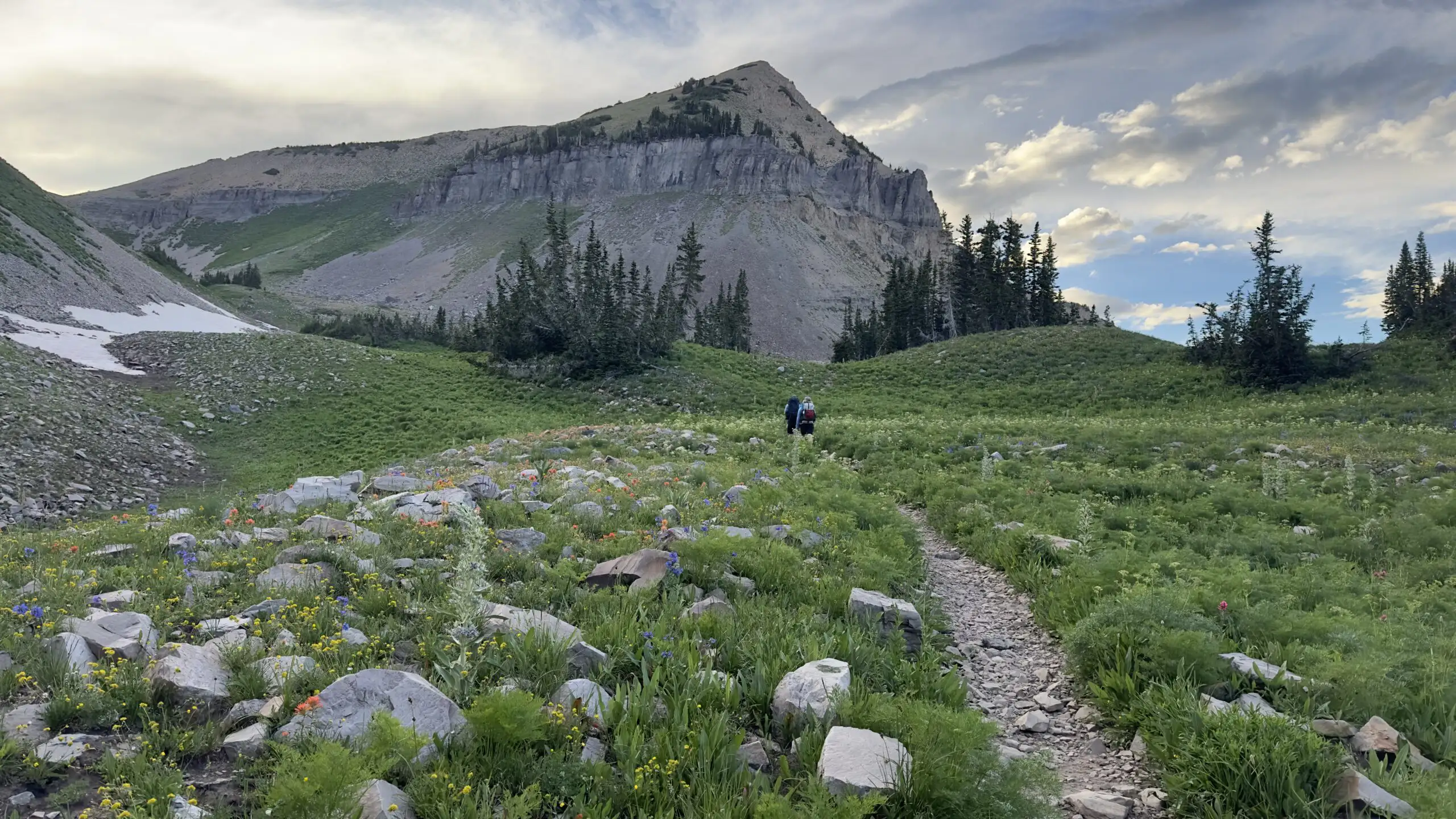
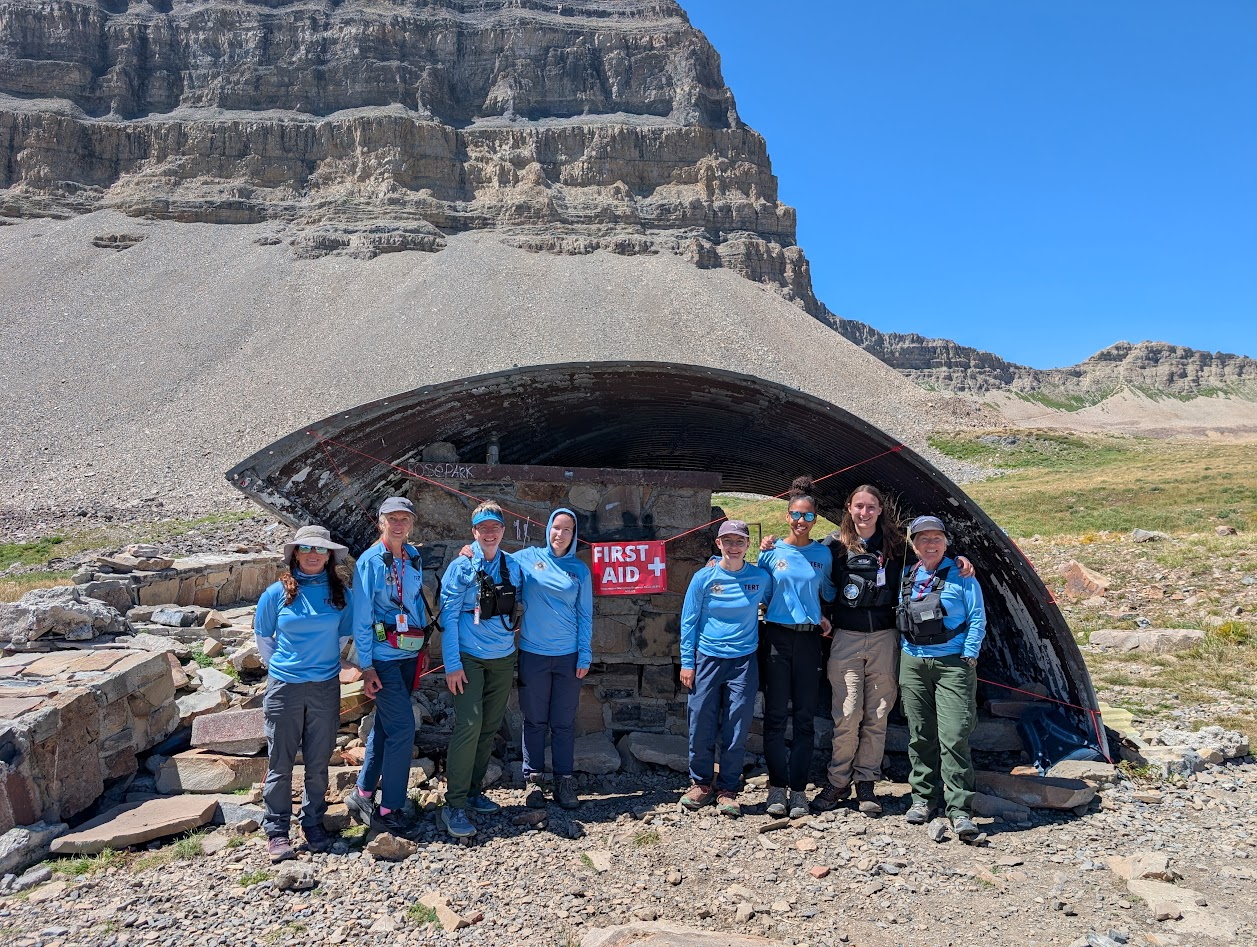
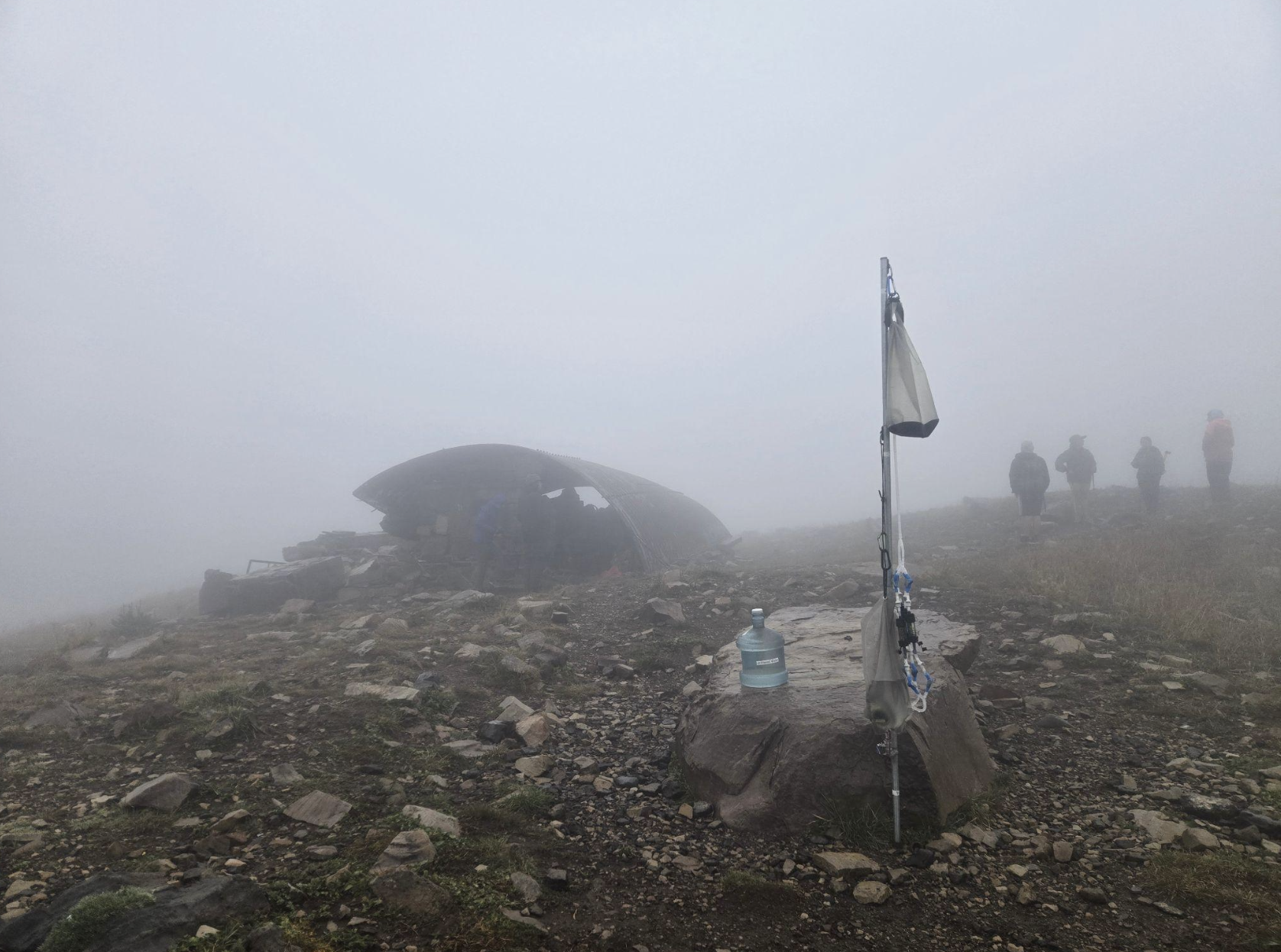
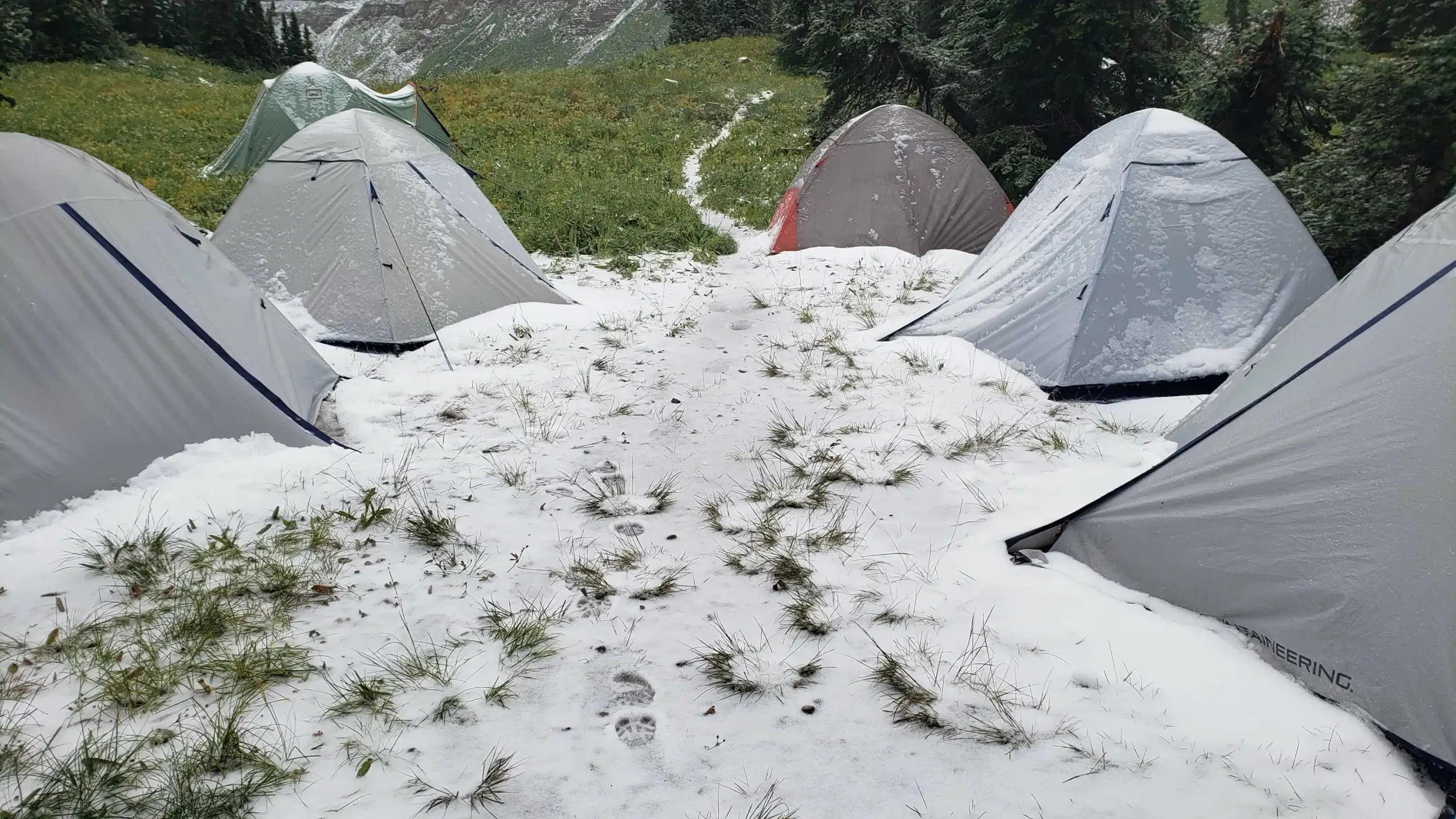
cooler at Emerald Lake than in the valley. The mountain makes its own weather, so High Camp members pack for everything from heat to snow.
A High Camp shift is like a two-night backpacking trip with a job to do.
-
Friday afternoon
Meet at Aspen Grove
Meet the team at the TERT shack north of the Aspen Grove parking lot.
-
Friday
Hike to High Camp
Hike ~5 miles with your weekend gear, gaining ~3,200 feet, to the Hidden Lakes area. It's a strenuous hike with a full pack.
-
On arrival
Set up camp
Set up camp and check in by radio with the trailheads and dispatch.
-
Friday night
On call overnight
Many hikers climb through the night to watch the sunrise. If someone needs help, the team is positioned to respond with Utah County Search and Rescue and air medical partners.
-
Saturday
Emerald Lake & the summit
The team bases at the Emerald Lake shelter, filtering water, helping hikers who need it, and sharing safety information. Members may hike to the summit at the discretion of the team leader or when needed to provide aid to a hiker. *NOTE* You may not get to the hike to the summit, even if you want to. Depending on staffing levels, incidents, etc., you may not get to visit the summit. Going to the summit is always at the discretion of the team leader.
-
Saturday night
Second night on the mountain
Back at camp and on call for anyone who needs help.
-
Sunday morning
Pack up & hike out
Break camp, leave no trace, and hike down. The shift ends by midday.*
* End times are approximate. If the team is helping with an incident, your shift may run later until it's resolved or handed off to Search and Rescue.
High Camp is the team's furthest-out station. Help can be hours away, so you need to be ready for more.
Altitude sickness & dehydration
At ~10,000 feet, the two often show up together. You'll learn to tell them apart, how to help hikers who have them, and when a hiker needs to head down.
Underprepared hikers
Hikers who planned for a warm valley day often aren't ready for wind, cold, or rain at Emerald Lake. Many run low on water, too. The team filters a lot of water from the lake for hikers and hands out electrolytes, which keeps dehydration from becoming a bigger problem.
Blisters, sprains, and strains
Long miles and rocky trail take a toll. You'll treat hot spots and blisters, wrap sprained ankles, and help hikers decide if they can make it down on their own.
Night & sunrise hikers
Overnight hikers face darkness, cold, and exhaustion. Calls can come at any hour.
Storms & lightning
Afternoon thunderstorms build fast above treeline, with little shelter on the upper trail.
Steep terrain & snow
Steep slopes, loose rock, and lingering snowfields lead to slips and falls, especially early in the season.
Who's on the team
- High Camp Team Leader: responsible for the whole weekend. During the main season, the High Camp Team Leader is in charge of TERT's response to incidents on the mountain.
- Secondary Team Leader: provides support to the main team leader.
- Communications: at least one licensed ham radio operator.
- Medical: one or two members with at least Wilderness First Aid certification or higher.
- General team members round out the team. Every member needs current CPR and Basic First Aid.
Physical demands
- ~5 miles and ~3,200 feet of gain to High Camp with your own pack. Keep it to 30 lb or less, water included.
- You may need to go all the way to the summit: ~14 miles round trip and ~4,900 feet of gain from Aspen Grove.
- At ~10,000 feet, mild altitude sickness is common. Plan to drink plenty of water and eat plenty of calories.
- Train with practice hikes at altitude, carrying weight.
Early season note: High Camp opens when the Sheriff's Office clears it based on trail conditions, usually in early July. Until then, the team staffs the trailheads and Stewart Falls on Saturdays only.
What to bring
- A backpack, 30 lb or less loaded
- Sleeping bag and sleeping pad
- Warm layers and rain gearA puffy jacket, warm hat, gloves or mittens, rain jacket, and rain pants, even in August.
- Food for the weekend2 dinners, 2 breakfasts, and a lunch, plus snacks.
- Water bottles or a hydration bladder
- A headlamp and a power bank
- A small personal first aid kit
- Sun protection
- Microspikes, early in the season
- Your TERT shirt
- Your ham radio, if you're a communications member
Members: see the full High Camp packing list.
Once you're accepted, you'll complete the High Camp Operations course in the team portal before you can sign up for this station. It's built from video filmed on the trail and at camp.
Access & orientation
The hike in, key landmarks, and finding the TERT campsite.
Setting up camp
Establishing the team's base and communications at High Camp.
Hydration & water safety
Getting safe drinking water at Emerald Lake.
Demobilization
Breaking camp and leaving the site clean for the next team.
New members also attend both spring training days.
Do I need backpacking experience?
No, but you need the right gear and the conditioning to carry a full pack ~5 miles and ~3,200 feet uphill. If you're new to backpacking, do a few practice hikes with weight before your shift.
Will I get altitude sickness?
Mild symptoms like a headache or poor sleep are common at ~10,000 feet. Drink plenty of water, eat well, and tell your Team Leader if you feel unwell. Spring training covers how to tell altitude sickness from dehydration.
Do I have to hike to the summit?
Not every weekend, but be ready to. If a hiker needs help near the top, team members may go all the way up. *NOTE* You may not get to the hike to the summit, even if you want to. Depending on staffing levels, incidents, etc., you may not get to visit the summit. Going to the summit is always at the discretion of the team leader.
What if the weather turns bad?
Pack for heat, rain, cold, and snow, whatever the forecast says. The Team Leader makes the call on safety, and the Sheriff's Office decides when High Camp is safe to open each season.