Every TERT season starts with two spring training days: one in the classroom and one on the mountain. They're where you learn how the team works, practice the situations you'll actually face on Timp, and get to know the people you'll serve with.
Why it matters: When a hiker gets hurt, there's no time to figure out the radio or who's in charge. Spring training is where you build those skills before they count, with Utah County Search and Rescue and experienced team leaders there to coach you.
Tap or click a topic to jump to that section:
The indoor day prepares you for the scenarios at the outdoor day, so plan to come to both.
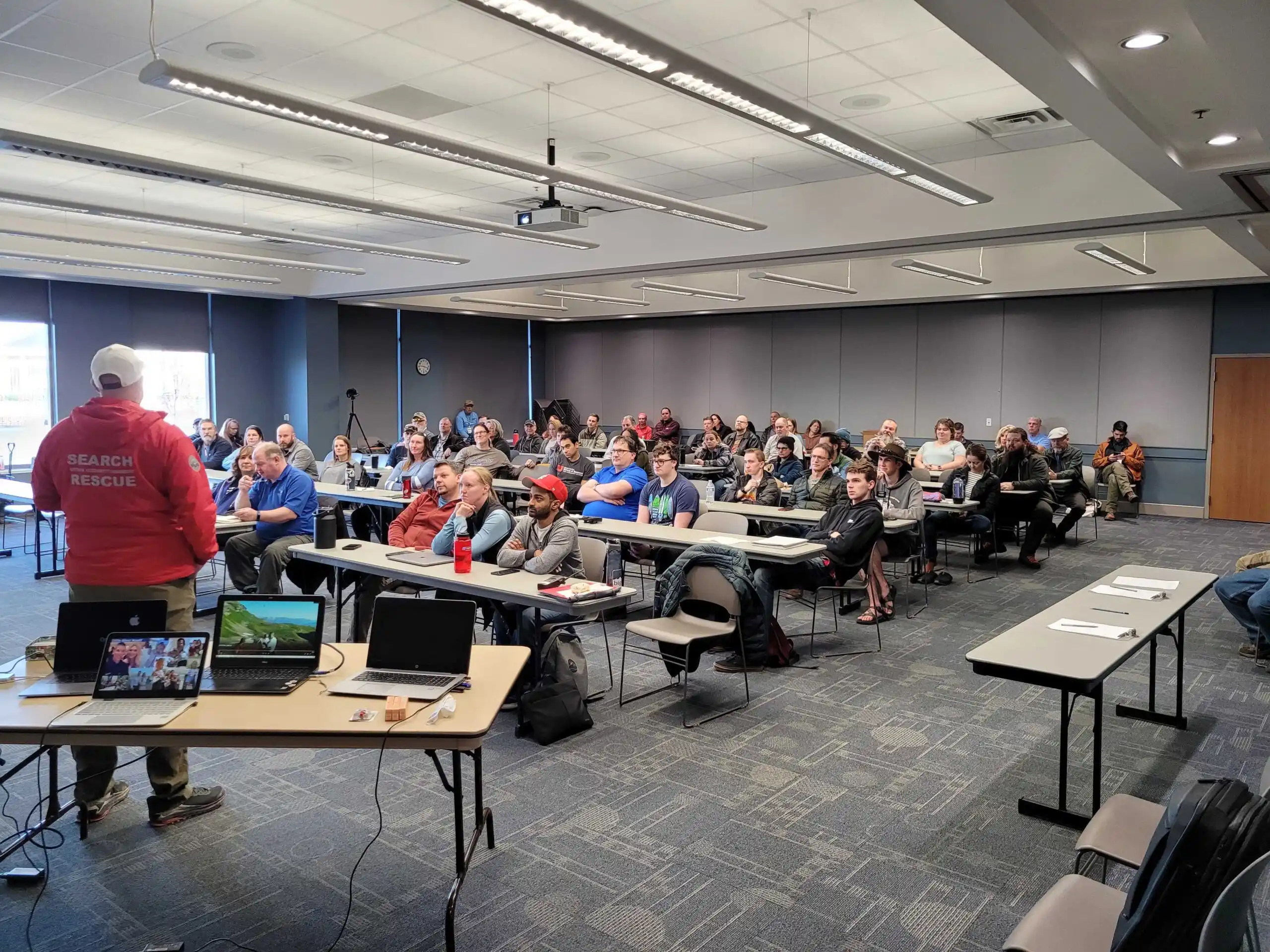
Classroom Training
- WhenSaturday, March 6, 2027
- Time8 AM – 12 PM
Check-in and mingling from 7:30 - WhereProvo (location sent before training)
- BonusCPR and First Aid pass-offs available afterward for those who need them

Hands-On Field Training
- WhenSaturday, May 15, 2027
- Time8 AM – about 1 PM
- WhereAspen Grove Trailhead, Theater in the Pines (or the parking lot if snow remains)
- WeatherHeld outside, rain or shine
A morning of short sessions from team leaders, medical providers, and the Utah County Sheriff's Office, with small-group scenarios after the break.
Mountain safety
How to assess risk on the mountain, from weather and terrain to fatigue, taught by the Utah County SAR Commander.
Incident command
Who's in charge, who needs to know, and how TERT works with the Sheriff's Office during an incident.
Radio communications
How the team stays connected across the mountain, check-in procedures, and talking clearly on the radio.
Medical decision making
Small-group scenarios that walk through assessing and caring for an injured or sick hiker.
Altitude & hydration
Telling altitude sickness from dehydration, and how to use the electrolytes in our med kits.
Psychological first aid
Calming techniques for frightened or panicked hikers, and checking in on yourself and your team.
Trailhead operations
The trail register, logs, and weekend reports, and how to talk with hikers as a helpful ambassador.
Physical readiness
How to train for your station so you're ready for the hike, the altitude, and the weight you'll carry.
Working with the public
We educate, we don't enforce. De-escalation skills for when a conversation with a hiker gets tense.
Topics change a little each year based on what the team saw the season before. Medical hours may be usable for recertification; check with your certifying organization.
This is where it comes together. You'll practice skills in small groups, then put them to work in realistic scenarios with Utah County Search and Rescue. The focus changes from year to year, but the day usually flows like this:
-
Check in & welcome
Meet the team, pick up any pre-ordered gear, and get an overview of the day.
-
Skills instruction
SAR and team leaders teach hands-on skills, such as splinting with the gear you'd have on the trail.
-
Small-group scenarios
Realistic scenarios where you find the patient, assess them, give care, and communicate by radio, just like on the mountain.
-
Debrief
Talk through the scenarios as a group: what went well and what to do differently.
-
Skills rotations
Rotate through stations like radio skills, med packs, water filters, and the trailhead shack.
-
Lunch & socializing
Bring a sack lunch and get to know your teammates.
-
Air medical visit
When weather and availability allow, a rescue helicopter crew lands to show what it's like: how to approach the aircraft safely and what the crew can do.
The end time is flexible, depending on when the helicopter crew can join us. A detailed schedule is emailed before training.
Utah County Sheriff's Office Search and Rescue
SAR members teach, help run the outdoor scenarios, and share guidance from real rescues on Timp. TERT works alongside SAR all season, so this is your first chance to learn how they operate.
Air Medical Crews
We try to have a rescue helicopter join each outdoor training, from partners like the Utah Department of Public Safety, AirMed, or Life Flight. The crew covers how to approach the aircraft safely and what they can do during a rescue.
Specific instructions are emailed before each training. Here's what to expect so you can get a head start.
Before outdoor training
- Review the indoor training highlightsSlides are sent after the indoor day. The medical topics come up again in the outdoor scenarios.
- Set up the apps we useSuch as what3words, which dispatch may use to share a patient's location, and offline maps of the Timpanogos area.
- Check the forecastTraining is outside, rain or shine.
What to bring
- A small daypack with:Small first aid kit, emergency blanket or small tarp, a couple of extra layers, water, and food. We'll use these for splinting practice and scenarios.
- Pen and notecards or a small notepad
- A sack lunch
- A camp chair, just in case
- Your handheld radio, if you're a radio operator
Every station involves some hiking with weight. Here's what to train for.
Trail Heads
10 lb Medical packYou may need to hike a short way up the trail to help a hiker in distress, carrying the medical pack.
Stewart Falls
3.5 mi Round trip · 650 ft gainCarry a 10 lb medical pack plus a small canopy, chairs, and your own food and water.
High Camp
5 mi Up to Emerald Lake · 3,200 ft gainA strenuous hike. Carry your own pack (30 lb or less, water included). You may need to go all the way to the summit: 14 miles round trip and 4,900 ft of gain from Aspen Grove.
- Start where you are and build gradually, about 3 weeks at each step.
- Train for the goal: hike hills, at altitude, carrying weight.
- Break in your boots and gear before the season.
- Practice your food and water strategy on training hikes.
Do I need medical experience before training?
You need current CPR and Basic First Aid by the start of the season. Training builds on that. If you need a CPR or First Aid pass-off, it's offered after the indoor training day.
I'm a returning member. Which day should I attend?
You must attend at least one, but we encourage both. The indoor day covers updates for the season, and the outdoor scenarios are the best practice you'll get before the mountain.
What if I can't make one of the training days?
New members are required to attend both. If you have a conflict, contact the Training Director as soon as possible to talk through your options.
What if it's raining or snowing on outdoor day?
Outdoor training happens rain or shine, so dress for the weather. If snow is still covering the Theater in the Pines, we'll set up in the Aspen Grove parking lot.
Do I need a ham radio license to take part?
No, but we strongly recommend it. Amateur radio is the team's main way of communicating between stations. See Radio Training and Resources to get started.
Is there online training too?
Yes. Each duty station has its own online course on the TERT training site. You'll need to complete a station's course before you can sign up for shifts there.